Area Guide No. 05 — The Hill Country West
Room to breathe twenty minutes from the city, plus the well, septic and land homework that buying acreage in Dripping Springs, Bee Cave, Lakeway and Wimberley really takes.
West of Austin the land rises into the Hill Country: oak and cedar, limestone creeks, wineries, and homes on real acreage. Dripping Springs, Bee Cave, Lakeway, and Wimberley give you space, scenery, and a quieter pace while keeping the city within reach. It is a different kind of buying, though, with well, septic, and land questions that resale and new-build suburbs never raise. Here is the honest guide.
What's inside

The Hill Country west at a glance
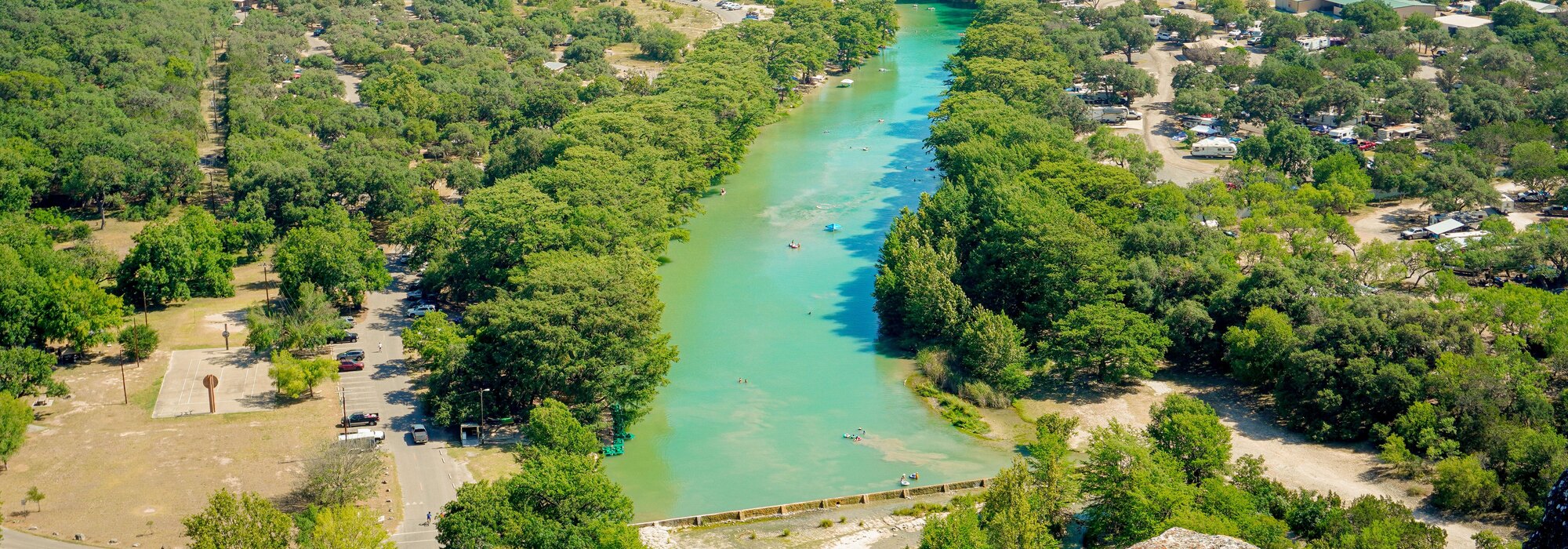
This is the metro's scenic edge, where lot sizes grow, the views open up, and a Saturday can mean a swimming hole, a winery, and a two-lane drive home at golden hour. You give up walkability and quick errands for space, privacy, and a genuine connection to the land. For the right family, nothing else compares.
Larger lots, acreage properties, hilltop views, and creek frontage. The landscape itself is the amenity, and it is a real one.
The area runs from a few acres with a modest home to gated communities and custom estates around Lakeway, Bee Cave, and Barton Creek. A wide range under one region.
Wells, septic systems, water rights, access easements, and floodplain along the creeks. These are learnable, and we will walk you through every one.
Errands and commutes are longer, and the roads are winding two-lanes in places. Trade accepted knowingly, it is worth it. Underestimated, it stings.
The towns, honestly
- Dripping Springs: the self-styled wedding and distillery capital of Texas, with wineries, breweries, Hamilton Pool nearby, and a growing mix of acreage and newer master-planned communities. A favorite for space with a real town center.
- Bee Cave & the Lakeway corridor: more built-up and amenity-rich, with the Hill Country Galleria for shopping, lake access, golf, and newer luxury communities. Hill Country living with suburban convenience.
- Lakeway & Rough Hollow: resort-style living along Lake Travis, marinas, golf, and established plus newer neighborhoods. The lake is the centerpiece.
- Wimberley: a smaller, artsy town further out with the Blanco River, Jacob's Well, Blue Hole, and a famous market day. The most rural and characterful of the group.
The area spans several districts, including Dripping Springs, Lake Travis, and others. School fit is yours to decide; we do not rank areas by schools. Verify boundaries, ratings, and campuses per address with the district and the Texas Education Agency.

Daily life in the hills
- Swimming holes and rivers: Hamilton Pool, Jacob's Well, Blue Hole, and the Blanco and Pedernales rivers are weekend staples, several by reservation.
- Wine and distilleries: the Highway 290 corridor toward Fredericksburg is genuine Texas wine country, and Dripping Springs anchors a real distillery scene.
- Lake Travis life: boating, waterfront dining, and Hill Country sunsets define the Lakeway and Bee Cave rhythm.
- Dark skies and quiet: get far enough out and the stars come back and the pace slows. It is a genuine lifestyle change, not just a longer driveway.
- The city when you want it: downtown Austin and the airport are a manageable drive, so you get the quiet without giving up the city entirely.
Buying acreage: well, septic & more
Buying land or an acreage home is a different transaction from a suburban house. None of it is scary once you know to check it, and this is exactly where builder-and-land experience earns its keep:
Is the home on a private well or a water utility or co-op? If it is a well, test flow rate and water quality, and understand the aquifer and any drought history before you rely on it.
Most acreage uses an on-site septic system. Get it inspected, know the type and age, and understand maintenance and any aerobic-system service contract.
How you legally reach the property matters. Confirm road access, shared driveways, and any easements crossing the land before you fall for the view.
Creek frontage brings floodplain questions. Check for deed restrictions, wildlife or ag valuation status, and the true tax picture. Beautiful land can carry rules.
On acreage, the view sells the home, but the well, the septic, and the access decide whether it is a good buy.
The money & the districts
- Price the specific property. Values swing widely with acreage, views, water, and improvements. Averages mean little out here; the individual property is everything.
- Ag or wildlife valuation can significantly change the tax picture on larger parcels. Understand whether a property has it, and what keeping it requires.
- Financing acreage differs. Large-lot and land loans can work differently from a standard mortgage. Line up a lender who knows rural and acreage lending early.
- Homestead exemption still applies to your primary residence; verify current rules with the county appraisal district.
- Insurance and wildfire: rural properties price differently, and defensible space matters in the Hill Country. Get a real quote before you commit.
General information, not tax, legal, or lending advice. Verify specifics with the county, a licensed lender, a licensed insurance agent, and qualified well and septic inspectors. We are glad to run real numbers on any property.

The commute & the roads
- Plan on more driving. Groceries, schools, and work are farther apart out here. Map your real weekly routine before you commit to a location.
- 290, 71, and RR 12 are the main arteries west. They are scenic and, at peak times and on winding stretches, slower than the map suggests. Drive them at your hour.
- Toll options: the 45SW and 71 toll lanes can speed parts of the trip toward the city. Factor toll cost into the monthly budget if you will use them daily.
- Remote and hybrid work make the Hill Country far more livable. If you drive in twice a week instead of five, the whole calculation changes.
List the two or three places you actually have to reach often. Where you land along I-35, MoPac, 183, and the tollways shapes your daily life more than almost anything else.
| Place you must reach | How often | Max drive you'll accept | Peak-time reality |
|---|---|---|---|
Send me your top three and I'll show you homes that fit the commute — not the other way around.
| What matters to you | 1 | 2 | 3 | 4 | 5 |
|---|---|---|---|---|---|
| Commute to your must-reach places | |||||
| All-in monthly cost fits comfortably | |||||
| Home age / condition / warranty | |||||
| Space & layout for your life | |||||
| What's within 15 minutes | |||||
| Taxes & district fees (MUD/PID/HOA) | |||||
| Resale outlook you're comfortable with | |||||
| Overall gut feel |
Comparing two or three homes? Score each one and the right answer usually gets a lot clearer.
Official links
- City of Dripping Springs city services and information
- City of Lakeway and City of Bee Cave local services
- Travis and Hays county appraisal districts for the tax picture, per address
- Texas Education Agency verify school districts and campuses yourself, per address
- TCEQ on-site septic and water-well information
- Texas Comptroller homestead and agricultural valuation basics
This guide is educational and general, not tax, legal, or financial advice; characterizations are qualitative and change. Verify specifics for any property, especially water, septic, access, and floodplain, before relying on them. Equal Housing Opportunity. TREC Information About Brokerage Services · TREC Consumer Protection Notice.
Guides are a start. A conversation is better.
Read what's useful, then tell me where you are and what you're trying to do. I'll give you a straight answer, no pressure.
