The Central Texas Relocation Playbook
Everything you need to move with confidence. The culture and the can't-miss spots, where to live, the true-cost math, and how to buy well from a distance.
Moving to a new part of the country is a big deal, especially from somewhere as different as New York or California. This guide is here to make it easier and a lot more fun: where to live, what makes each area special, the best things to do, what it really costs, and how to land smoothly. It's the stuff we'd tell a good friend moving to town — no sales pitch, just the good stuff.
What's inside
- Why you'll love Central Texas
- Best things to do
- How Central Texas eats
- The seasons & the events
- Choosing where to live
- Austin's most-coveted addresses
- The order of decisions
- Budget beyond the mortgage
- Rent first, or buy now?
- Builder vs. resale
- Relocating from a distance
- Financing when you're moving here
- Your relocation tools
- Your relocation timeline
- Your first weeks in Central Texas
- Questions to ask before you buy
- Handy links to bookmark
- How to verify everything here
Why people fall for Central Texas
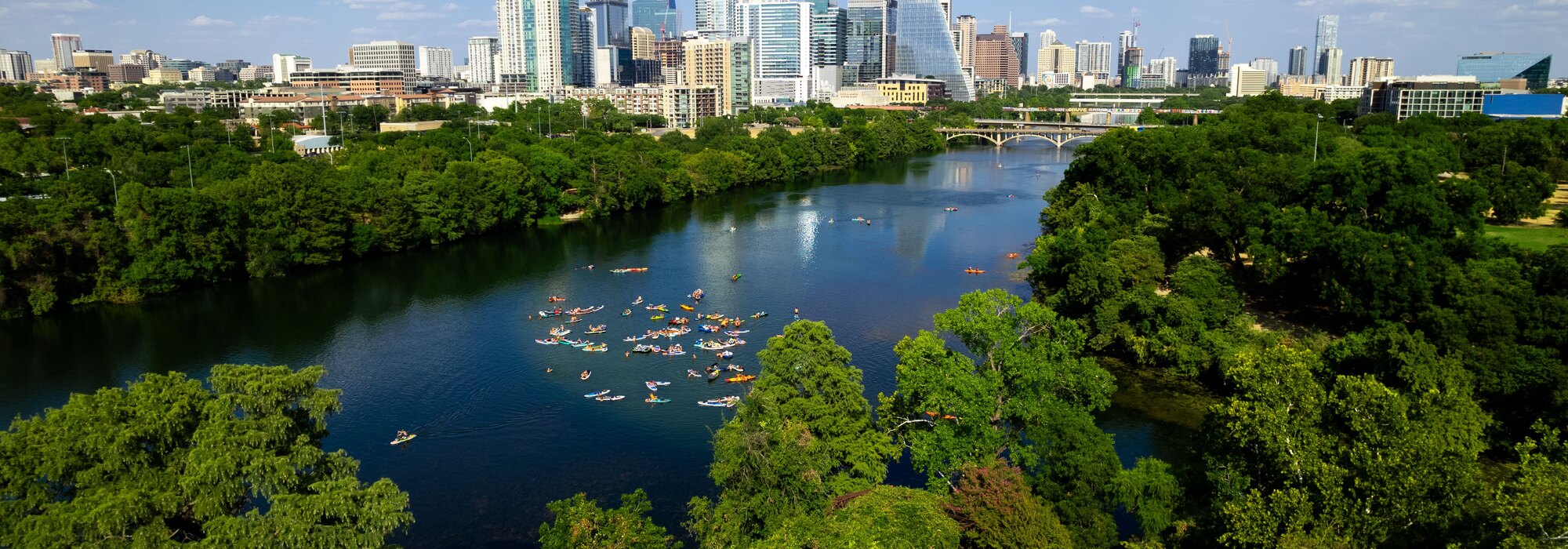
If you're coming from New York, California, or really anywhere, the first thing that hits you is the space and the ease — more house, more yard, more sky, and a pace that leaves room to actually enjoy it. Then you notice the rest: sunshine most of the year, water and Hill Country in every direction, live music somewhere every night, and some of the best food in the country coming out of gas stations and trailers. And yes — no state income tax.
Swim in 68°F spring water at Barton Springs, walk or bike the Lady Bird Lake trail downtown, cool off in the Barton Creek Greenbelt, and get out on Lake Travis and Lake Austin. The Hill Country starts 20 minutes west.
World-famous barbecue, breakfast tacos that become a way of life, serious Tex-Mex, and a food-truck and restaurant scene that punches way above the city's size.
Austin means it. Neighborhood honky-tonks, South Congress and Red River clubs, and marquee events like ACL and SXSW — plus Formula 1 and Austin FC when you want the big stage.
Your dollar stretches further than the coasts, the region is booming with jobs and new communities, and the vibe stays friendly and unpretentious. People here are glad you came.
Summers are long and hot (you'll master shade, early mornings, and the pool). Spring brings famous cedar and oak pollen. And Central Texas is growing fast — which is exciting, but it makes where you land, and your commute, matter more than in a sleepy market. That's the whole reason to plan it well.

Get out and explore: a starter list
Print this, hand it to the kids, or just start working down it. It's how transplants fall in love with the place.
On the water
- Barton Springs Pool — a spring-fed pool that stays ~68°F year-round, in the middle of Zilker Park
- Lady Bird Lake & the Butler Trail — 10 miles of hike-and-bike loop with the downtown skyline; rent a kayak or paddleboard
- Lake Travis & Lake Austin — boating, waterfront dining, and Hill Country sunsets west of town
- Float the San Marcos or Comal River — crystal-clear tubing in San Marcos and New Braunfels all summer
- Hamilton Pool & Jacob's Well — iconic swimming holes in the Hill Country (reservations required)
Hill Country & day trips
- Dripping Springs — the “wedding and distillery capital of Texas” — wineries, breweries, and Hamilton Pool nearby
- Wimberley — a artsy small town with swimming holes and a famous market day
- Fredericksburg — German heritage, Texas wine country, and Enchanted Rock — a perfect day trip
- San Antonio — the River Walk and the Alamo, about 80 minutes south
The city & the icons
- South Congress (SoCo) — shops, patios, live music, and the classic “i love you so much” wall
- Zilker Park & the Botanical Garden — the city's backyard, and home to ACL Festival each fall
- Mount Bonnell — the best easy sunset view over the hills and Lake Austin
- Catch a game or a show — Austin FC at Q2 Stadium, UT Longhorns, F1 at Circuit of the Americas
Tell us your neighborhood and what your family's into, and we'll send a tailored “get to know your new backyard” list. Just ask.

How Central Texas eats
Ask any transplant what surprised them most and food comes up first. This is barbecue's heartland, the breakfast-taco capital of the world, and a trailer-to-fine-dining scene that punches way above the city's size. Here's a starter map locals actually name — not a ranking, just where to begin.
This is the heartland. Franklin Barbecue and la Barbecue for the pilgrimage, Terry Black's downtown, and the legendary Salt Lick out in Driftwood. Plan a whole weekend around the trail.
Austin runs on them, and everyone picks a team. Veracruz All Natural (the migas taco), Tacodeli, and Juan in a Million on the East Side are the classic first stops.
Matt's El Rancho for old-school Tex-Mex and Bob Armstrong dip, Suerte and El Naranjo for a more serious, modern take on interior Mexican.
Whole courtyards of trailers turn out world-class tacos, Thai, pizza, and more. It's the most Austin way to eat — casual, outdoors, and often the best value in town.
Uchi for sushi that made Austin a food city, Jeffrey's for classic Old-Austin fine dining, and Odd Duck for farm-to-table. Reserve ahead — the good ones book up.
Home Slice pizza on South Congress, Torchy's Tacos for the queso, and a deep bench of local roasters for your new morning routine.
Tell us where you're landing and how you like to eat, and we'll send a tailored list of the spots within a few minutes of home — the everyday ones you'll actually use, not just the famous names. Just ask.

Central Texas by season
One of the best things about living here is that there's always something on. A quick read on what each season feels like — and the events people build whole trips around — so you can time a scouting visit or a move around the good stuff.
The showpiece season: wildflowers and bluebonnets along the highways, perfect patio weather, everything green.
Don't missSXSW & Rodeo Austin (March) · bluebonnet drives · Zilker Kite Festival
Hot and long — you'll master early mornings, shade, and the water. This is when the pools and rivers earn their keep.
Don't missFloat the San Marcos & Comal · Blues on the Green · July 4th on Lady Bird Lake
The payoff. Cooler air, the city's biggest weekends, and the best stretch of the year to be outside.
Don't missACL Festival (two weekends, Oct) · F1 U.S. Grand Prix (Nov) · Austin FC season
Mild and easy by most standards — sunny afternoons with the occasional cold snap. Great for house-hunting without crowds.
Don't missTrail of Lights · Armadillo Christmas Bazaar · patio weather most weeks
If you get to choose, the fall and spring shoulder months are the sweet spot — kinder weather for moving, and you're settled before the next big season. But we help families land smoothly in every month of the year; the right time is the one that fits your life.
Choosing where to live
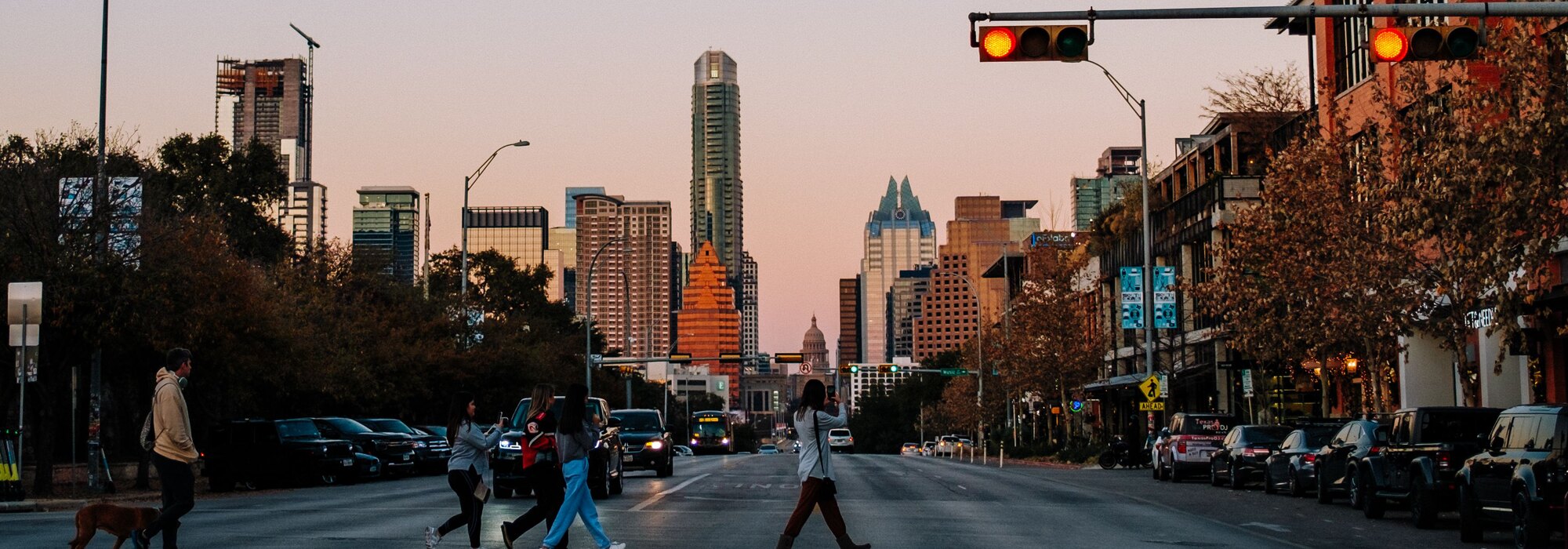
Here's the secret every smooth relocation shares: start with how you want your daily life to feel — not with a price. Pick the life, and the right area (and the right home) tend to follow. Central Texas isn't one place; it's Austin plus a ring of distinct communities, each with its own character, commute, and price point. This is about fit, not rankings — the "best" area is the one that matches your life.
Schematic — not to scale, and not a ranking. Areas are grouped for orientation by direction and commute only. The right area is the one that fits your life; we'll figure that out together. Equal Housing Opportunity.
| Zone | The feel | Often a fit for | Commute orientation |
|---|---|---|---|
| Austin core South & Central | Close-in, walkable pockets, food & music, quick to downtown & the airport | City character, established neighborhoods | Heart of the metro — you pay for proximity |
| Southern corridor Buda · Kyle · San Marcos | Fast-growing, lots of newer construction; small-town to college-town range | New homes, more space per dollar | I-35 south — corridor & peak times matter |
| Hill Country west Dripping Springs · Bee Cave · Lakeway · Wimberley | Hills, greenbelt, wineries, more acreage | Space, scenery, a quieter pace | 290/71 & winding roads — verify well/septic & taxes |
| Northwest Cedar Park · Leander · Liberty Hill | Established suburban with newer edges; tech-corridor access | Suburban amenities, newer neighborhoods | 183/MoPac — MetroRail reaches Leander |
| North Round Rock · Georgetown · Pflugerville · Hutto | Mature suburbs to fast-growing edges | Value, space, employers to the north | I-35 vs SH-130 changes the drive a lot |
| East Manor · Del Valle | Newer, value-oriented growth near the airport & SH-130 | Newer homes, value, east-side access | Changing fast — check districts & fees |
Pete's firsthand expertise runs deepest in the South Austin core, the southern corridor (Buda · Kyle · San Marcos), the Hill Country west, and the fast-growing east side — and, having sold new homes for builders for years, in new construction anywhere in the metro. The Seider Realty Team covers the rest of Central Texas with trusted partners, so wherever you land, you're never handed off to a stranger.
Where you land along I-35, MoPac, 183, and the tollways shapes your daily commute more than almost anything else. Tell me the two or three places you have to reach often, and we'll look at homes that fit that — not the other way around.
Every pocket has its own trade-offs. Ask me about a specific area and I'll give you a straight read.
Austin's most-coveted addresses
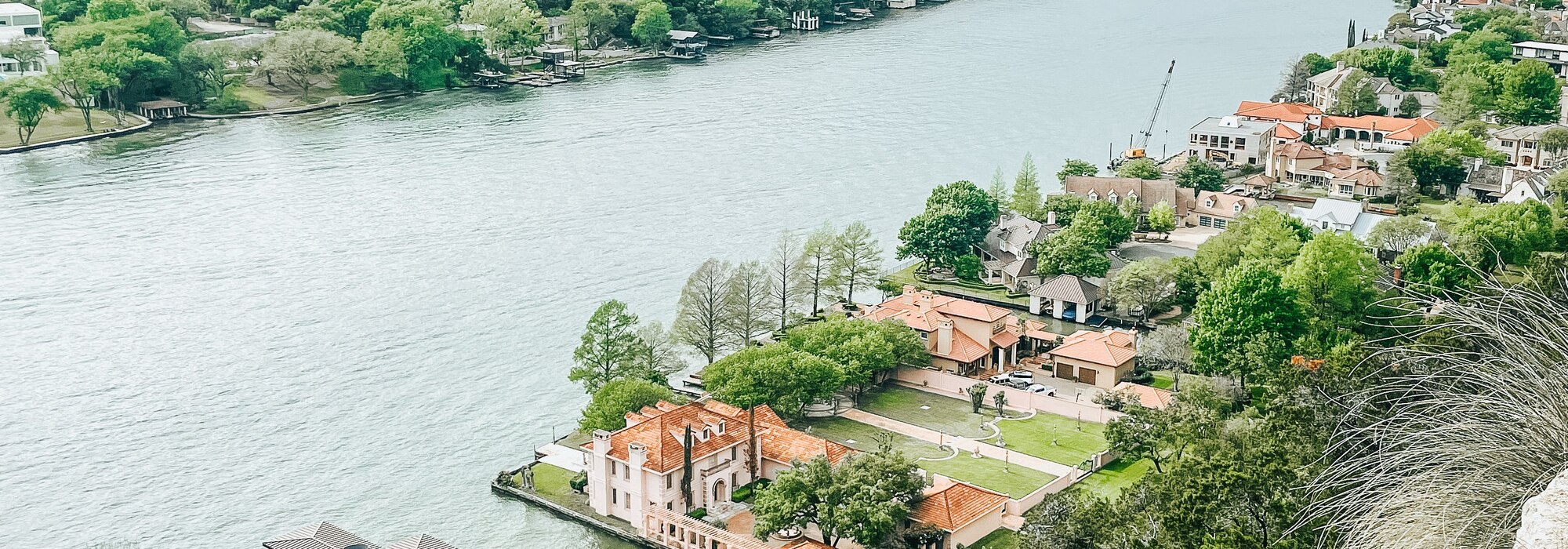
If you're relocating at the higher end — an executive move, a waterfront dream, a Hill Country estate — Central Texas delivers, and the best of it rarely looks like anywhere else. A quick, honest orientation to the areas people ask about most:
| Area | The draw | Known for |
|---|---|---|
| Westlake & West Lake Hills Rollingwood | Hillside privacy and larger lots, minutes from downtown | Custom estates, tree cover, quick Loop 360 access |
| Tarrytown & Old West Austin Pemberton Heights | Historic, tree-lined, walkable and close-in | Character architecture and Lady Bird Lake at your doorstep |
| Lake Austin waterfront | Waterfront living with private docks and boat access | Estate lots, water views, weekends on the lake |
| Barton Creek & Spanish Oaks | Gated privacy in a Hill Country setting | Championship golf, seclusion, luxury new builds |
| Lakeway & the Lake Travis corridor Bee Cave · Rough Hollow | Resort-style lake life west of the city | Marinas, golf, Hill Country views, newer luxury communities |
| Downtown high-rises | Lock-and-leave condo living in the urban core | Walkability, skyline & lake views, full-service buildings |
At this level, the diligence matters: floodplain status (Austin has a lot of it), dock and waterfront permitting on Lake Austin/Lake Travis, well and septic on acreage, historic-district exterior-review limits (Old West Austin and parts of Tarrytown), short-term-rental rules, and the exact school attendance boundary for an address. Families often research Eanes ISD and Lake Travis ISD — always verify current ratings and boundaries yourself, per address.
A meaningful share of luxury Central Texas homes sell off-market or before they hit the portals. Working with a connected local advisor is how you see them first — and how executives relocating from out of state buy with discretion and confidence, often sight-unseen.
Start with the order
Most people relocating here start by browsing homes. That's backwards. The home is the last decision — it falls out of four earlier ones. Get these right and everything after gets easier.
The home is the last decision, not the first. Decide the other four before you fall in love with a listing.
Budget beyond the mortgage
The number that matters isn't the price — it's the monthly all-in. Out-of-state buyers are most often surprised here, so build your budget on the full picture:
- Principal & interest — the part everyone plans for
- Property taxes — often higher in Texas — varies by county, city & school district
- Homeowners insurance — get a real quote early
- HOA / MUD / PID — common in newer communities
- Utilities & upkeep — the ongoing costs, not just move-in
The Texas trade-off: no state income tax — but the trade-off usually shows up in property taxes, which tend to run higher than in many states. Compare your current cost of living to the Central Texas all-in monthly, not the price tag.
Illustrative only — not a quote. Proportions are for orientation; your actual numbers depend on the specific home, district, and lender. Ask me to run real figures on any address you're weighing.
Property taxes, homestead, MUD & PID — the parts that surprise people
No state income tax, but higher property tax. On a new build, taxes are often reassessed once the home and neighborhood are complete — budget for the settled number, not year one.
Owner-occupants can typically file a homestead exemption that lowers the taxable value of a primary residence. Worth knowing before you buy — verify current rules with the county appraisal district.
Newer communities may sit in special districts that add to your tax bill or fees. Always ask which districts a specific home is in, and what they fund.
Roof age, home size, location, and construction type move your premium. Get a real quote early — don't assume your out-of-state rate carries over.
| Principal & interest (P&I) | $ |
| Property taxes (÷ 12) — use the actual rate for the address | $ |
| Homeowners insurance (÷ 12) | $ |
| HOA / MUD / PID (÷ 12 if applicable) | $ |
| Utilities & ongoing upkeep (estimate) | $ |
| All-in monthly cost | $ |
Build your budget on this number — not the price tag. I'm glad to fill this in with real figures for any specific home.
Rent first, or buy now?
This is the question almost every relocating family actually has — and most guides dodge it. Here's the honest version. There's no universally right answer; there's a right answer for your situation.
Leaning rent first. A short lease near where you think you'll land lets you test commutes and neighborhoods before committing hundreds of thousands of dollars. There's no prize for rushing.
Buying can make sense. If you'll stay long enough to absorb the cost of buying and selling, and the all-in monthly fits comfortably, owning may beat renting — especially in newer communities with builder incentives.
Builder vs. resale
For relocating buyers on a timeline, this is a bigger fork here than in most markets. Neither is "better" — it depends on your situation.
| Consider | New construction | Resale |
|---|---|---|
| Timeline | Move-in-ready inventory or build-to-suit | Available now; close on your terms |
| Condition | Brand new; builder warranty | Known quantity; may need updates |
| Location | Usually newer, outer communities | Established, often closer-in neighborhoods |
| The fine print | Incentives, upgrades, lot premiums, builder contracts & lender tie-ins | Inspection, repairs, seller negotiation |
| Representation | The on-site agent works for the builder — bring your own | Your agent represents you throughout |
If new construction is on the table, know how it really works
Builder incentives often show up as rate buy-downs, closing-cost credits, or design-center dollars rather than a lower sticker. Know which one actually helps your situation.
Some upgrades you'll be glad you bought; others you'll never see again at resale. I'll tell you which is which before you spend at the design center.
Lot premiums, phase pricing, and builder contracts have their own logic. The contract is written by the builder's team — read it with someone on your side.
The in-house lender's incentive may be real — or may not beat an outside quote once you compare all-in. Always compare.
The friendly person in the model home represents the builder — not you. Builder registration policies vary by community and builder — in many, you can only be represented if your agent is involved from your first visit. So loop in your own agent before you tour any community; it costs you nothing and it protects you.
Builders rarely advertise their best incentives, and they change weekly. The Seider Realty Team keeps a running incentive tracker of what's really on the table across Central Texas — rate buy-downs, closing-cost credits, design-center dollars, lot-premium waivers, and price drops — so you can tell a genuinely valuable offer from marketing. Ask for this week's tracker.
Bring your own advocate to a new-home community — before your first model-home visit, not after you've signed.
Relocating from a distance
You can do most of this before you ever land in Texas:
- Live video walkthroughs — I walk homes for you on video and give an honest read, the good and the concerning, so you're not flying in for every listing
- A focused visit — when you do come, we run a tight itinerary of the right homes and areas, not a random open-house tour
- One point of contact — I coordinate inspections, financing, and the moving parts across the miles
- Registered before builder visits — if new construction is in play, we get me registered as your agent before you tour any community
Pre-approval and target areas first → live video tours to build a shortlist → one focused in-person trip to confirm → offer, inspection, and financing coordinated by me → a clean closing you can often do remotely. You're never guessing what happens next.
Financing when you're moving here
A few things worth understanding before you talk to a lender — none of this is financial advice, just the lay of the land so you ask better questions:
A real pre-approval (not just a pre-qualification) tells you your true budget and makes your offer credible. Do it before you fall for a home.
A lender who knows Central Texas, its taxes, and new-construction quirks can save you headaches. I'm glad to connect you with solid ones — you're never obligated.
Builders often offer incentives to use their lender. Sometimes it wins; sometimes an outside quote beats it once you compare all-in. Always compare both.
Especially on new builds, incentives may come as a rate buy-down or closing-cost credit rather than a lower price. Know what actually helps your monthly.
Your income and employment docs travel fine, but property taxes and insurance here may differ from what you're used to — which changes your monthly, and sometimes your approval math. Build your budget on the Central Texas all-in number, not your old one.
General information only — not financial, tax, or lending advice. Talk to a licensed lender about your specific situation.
Your relocation tools
Print these, fill them in, and bring them along. They turn a stressful move into a series of small, clear decisions.
List the two or three places you actually have to reach often. Where you land along I-35, MoPac, 183, and the tollways shapes your daily life more than almost anything else.
| Place you must reach | How often | Max drive you'll accept | Peak-time reality |
|---|---|---|---|
Send me your top three and I'll show you homes that fit the commute — not the other way around.
| What matters to you | 1 | 2 | 3 | 4 | 5 |
|---|---|---|---|---|---|
| Commute to your must-reach places | |||||
| All-in monthly cost fits comfortably | |||||
| Home age / condition / warranty | |||||
| Space & layout for your life | |||||
| What's within 15 minutes | |||||
| Taxes & district fees (MUD/PID/HOA) | |||||
| Resale outlook you're comfortable with | |||||
| Overall gut feel |
Comparing two or three homes? Score each one and the right answer usually gets a lot clearer.
Your relocation timeline
A simple sequence — work backward from your move date.
- Set your move date and work backward
- Get pre-approved (I can connect you with solid local lenders)
- Talk through areas + all-in budget; narrow to 2–3 target areas
- Decide your resale vs. new-construction lean
- Start live video tours; shortlist homes and communities
- Plan a focused in-person visit
- If new construction: get me registered before visiting builders
- Make the offer; negotiate terms and inspections
- Coordinate inspection, appraisal, and financing
- Line up movers, utilities, and address changes
- Close and get your keys
Your first weeks in Central Texas
Once you close, a short, practical checklist so nothing slips through the cracks:
- Set up utilities & internet — electricity (Texas has retail choice in many areas), water, gas, trash, and internet before move-in
- File your homestead exemption — for your primary residence, once you own and occupy it; check the county appraisal district for timing and rules
- Texas driver's license & vehicle registration — new residents generally have a limited window; check the Texas DMV/DPS for current deadlines
- Update voter registration & address — USPS mail forwarding, banks, employer, subscriptions
- Find your people & places — doctor, dentist, vet, schools, the grocery run, your coffee spot. Ask me — I love pointing new neighbors in the right direction
- Keep your closing documents safe — you'll want them for taxes and the homestead filing
The keys are the start, not the finish. Need a recommendation months later? Reach out any time — most of our business comes from people we've taken good care of.
Questions to ask before you buy
- What's the actual property-tax rate on this address — and are there MUD/PID/HOA fees?
- What's the true monthly all-in cost, not just the price?
- What's the resale outlook for this area and this type of home?
- For new builds: what's really in the incentive, and which upgrades hold value?
- What districts is the home in, and what do they fund?
- “If this were your money, what would you do?”
Handy links to bookmark
A few genuinely useful, official resources for settling in. (These are the real deals — save them.)
- Visit Austin — things to do, events, and neighborhood guides
- City of Austin — services, permits, and city info
- Austin Energy — set up your electricity before move-in
- Texas DMV — vehicle registration and titling for new residents
- Texas DPS — your Texas driver's license
- Texas Comptroller — property-tax and homestead-exemption basics
- Travis County Appraisal District — look up the actual tax picture for an address (Austin)
- Hays County Appraisal District — for Buda, Kyle, San Marcos and Hays County
- Williamson County Appraisal District — for Round Rock, Georgetown, Leander and Williamson County
- CapMetro — buses, MetroRail, and getting around
How to verify everything in this guide
Good decisions run on real numbers, not averages. Here's how to check each thing for a specific home — and I'm glad to pull these for you:
- Property tax rates & homestead: the county appraisal district (Travis, Hays, or Williamson CAD) and the Texas Comptroller — for the exact rate and current exemption rules
- MUD / PID districts: the statutory disclosure for the property and the county — for what district a home sits in and what it funds
- Homeowners insurance: a licensed Texas insurance agent — for a real quote on the specific home
- School information: the district and the Texas Education Agency — review ratings yourself; I don't rank areas by schools
- Commute reality: drive it yourself at the time you'd actually travel — no map estimate beats a real Tuesday
This guide is educational and general in nature — not tax, legal, or financial advice, and not a quote. Figures and examples are illustrative. Verify specifics for any property before you rely on them. Equal Housing Opportunity. TREC Information About Brokerage Services · TREC Consumer Protection Notice.
Prefer to talk it through? Just reach out.
Guides are a start. A conversation is better.
Read what's useful, then tell me where you are and what you're trying to do. I'll give you a straight answer, no pressure.
